
Sand Analysis

The difference between a common mineral resource and a high-value-added input lies in the details of its composition and morphology. An under-explored mineral resource may overlook opportunities in higher-value markets, where approval standards are based on specific requirements for each sector. The CRC (Ceramic Materials Service Center) offers a comprehensive technical characterization platform for mining […]
X-ray Diffraction (XRD): Unlock the Crystalline Structure of Your Materials

CRC Team – Center for Ceramic Materials Services The chemical composition of a material or mineral is only part of the story. The way atoms organize themselves into crystalline, vitreous, and amorphous phases is what truly defines properties such as strength, reactivity, color, and stability. One of the most advanced tools we use at […]
BET and BJH: Essential Tools for Characterizing Porosity and Reactivity

CRC Team – Ceramic Materials Service Center A material’s performance, reactivity, and quality are defined by its surface. But do you truly know the surface properties of your products and raw materials? The gas adsorption technique (BET method) is the gold standard for quantifying the specific surface area ($m^2/g$) of a material. Complementarily, the analysis […]
Maximizing Mineral Value: CRC’s Analytical and Technological Solutions for Adding Value to the Rare Earth Supply Chain in Brazil

CRC Team – Ceramic Coatings Center In the current geopolitical landscape, Rare Earth Elements (REE) and critical metals represent the future of technology and the energy transition. They are fundamental components for electric vehicle motors, permanent magnets, catalysts, and high-tech products. Brazil, holding the world’s second-largest REE reserves, is at the heart of this revolution; […]
Drying of clays in rotary dryers

The lecture presented by the commercial technical director of CRC, Dr. Fábio Melchiades, presented the results obtained during the research project and developed financed by Comgás and which included a partnership with the companies Cerâmica Carmelo Fior and Cardall. The lecture is available below and also on YouTube.
Study on Debonding in Ceramic Tile Systems

Detachment of ceramiccladding tiles The National Association of Ceramic Covering Manufacturers – Anfacer and the São Paulo Association of Covering Ceramics – Aspacer promoted a broad scientific study with the aim of identifying the causes of the detachment of ceramic tiles. The CRC carried out the first part of the study mapping national ceramic production, […]
Performance of Clays in Sanitaryware Manufacturing

Ceramic tableware (tableware, sanitaryware, etc.) can be manufactured with ceramic bodies of different technical characteristics, such as earthenware, porcelain tile ceramic bodies, stoneware or fireclays. In all these ceramic bodies, clays play a central role, as they are responsible for enabling the shaping of the pieces and ensuring their integrity in the processing stages before […]
Crazing Resistance of Ceramic Glazes
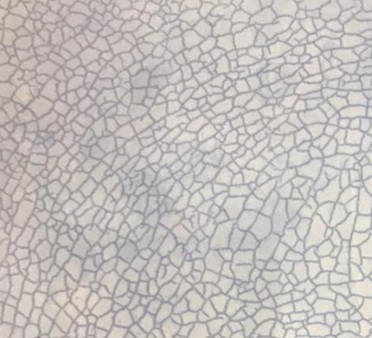
Ceramic materials, as a rule, do not present high mechanical resistance when subjected to tensile stress. It is generally considered that the compressive strength of ceramic products is about ten times higher than the tensile strength. This particularity becomes very relevant in the manufacture of glazed ceramic products, as tensile stresses can develop in the […]
Crystalline phase analysis

While Chemical analyses inform the nature and proportion of chemical elements present in a given material, crystalline phase analysis allows the identification and, in some cases, quantification of the crystalline phases that make up the samples. Carried out using the X-ray diffraction technique, through different procedures (powder method, with preferential orientation, internal standard method, Rietveld […]
Minerals and inputs for the ceramic industry

A Brazilian ceramic industry occupies a prominent position on the international scene, placing Brazil among the world’s main producers of traditional ceramics (blocks, tiles, coverings, sanitaryware, electrical insulators, tableware, refractories, etc.). As a result of the significant production volume, the ceramic sector stands out as a prominent consumer of industrial minerals, chemical products and energy […]
Industrial applications of chemical analysis

As chemical analysis They are among the most used analytical techniques for the characterization of industrial minerals and inorganic compounds. They can be performed using different techniques: XRF (X-ray fluorescence), ICP (inductive coupling plasma), EAA (atomic absorption spectrometry), etc.; and provide information regarding the proportion between the chemical elements that make up the compounds. Its […]
Dispersion and deflocculation of suspensions

In the manufacture of materials of different natures, it is very common for suspensions of solid particles to be used at some stage of the processing, also known in some sectors, such as slurries or slips. Unlike solutions, where solids are dissolved in water or another solvent, in suspensions the particles are only dispersed. In […]